

alcohol free mouthwash is one of the most requested options among people with sensitive or inflamed gums, but what do the latest clinical studies and dentist guidelines really say? In this guide, you’ll get actionable facts, practical advice on how to choose a gentle mouthwash for gums, and a transparent look at what science and real-world users can (and can’t) answer right now.
Key Takeaways
- Alcohol free mouthwash offers a gentler alternative for people with sensitive gums, with clinical trials reporting less burning and dryness than alcohol-based formulas.
- Some studies show alcohol-free mouthwash can reduce plaque as well or better than alcohol-based options, but large ADA-quality trials and long-term user feedback are still lacking.
- Always check ingredient labels for proven actives like CPC, xylitol, or Brazilian propolis, and consult your dentist if you have persistent gum issues.
- What is an alcohol free mouthwash and who should consider one?
- How to use alcohol free mouthwash: a step-by-step guide for sensitive gums
- Advanced analysis: evidence, pitfalls, and what’s missing
- Conclusion: best practices and actionable next steps
- Frequently Asked Questions
What is an alcohol free mouthwash and who should consider one?
Alcohol free mouthwash is an oral rinse that does not contain ethanol or other forms of alcohol. These products are often labeled as a gentle mouthwash for gums and are specifically formulated to reduce the burning, dryness, and irritation that alcohol-based rinses can cause—particularly in people who already experience gingival sensitivity or early-stage gum inflammation.
Why switch to an alcohol free mouthwash? Clinical studies suggest that alcohol-free rinses are less likely to cause mucosal irritation and are preferred by those who notice mouth-burning or post-rinse dryness. The primary goals align with mainstream oral care: supporting plaque control, helping manage early gingivitis, and keeping breath fresh. However, it’s important to note that for severe or progressing gum disease, prescription products or direct dentist care may still be necessary.
For readers seeking a gentle mouthwash for gums, these options appeal particularly to anyone with sensitive tissue, recent dental work, dry mouth complaints, or an allergy risk related to alcohol-based ingredients.
Clinical data confirms the difference: Alcohol free mouthwashes have been shown to avoid the burning, dryness, and irritation reported with alcohol-based versions. [source]
How to use alcohol free mouthwash: a step-by-step guide for sensitive gums
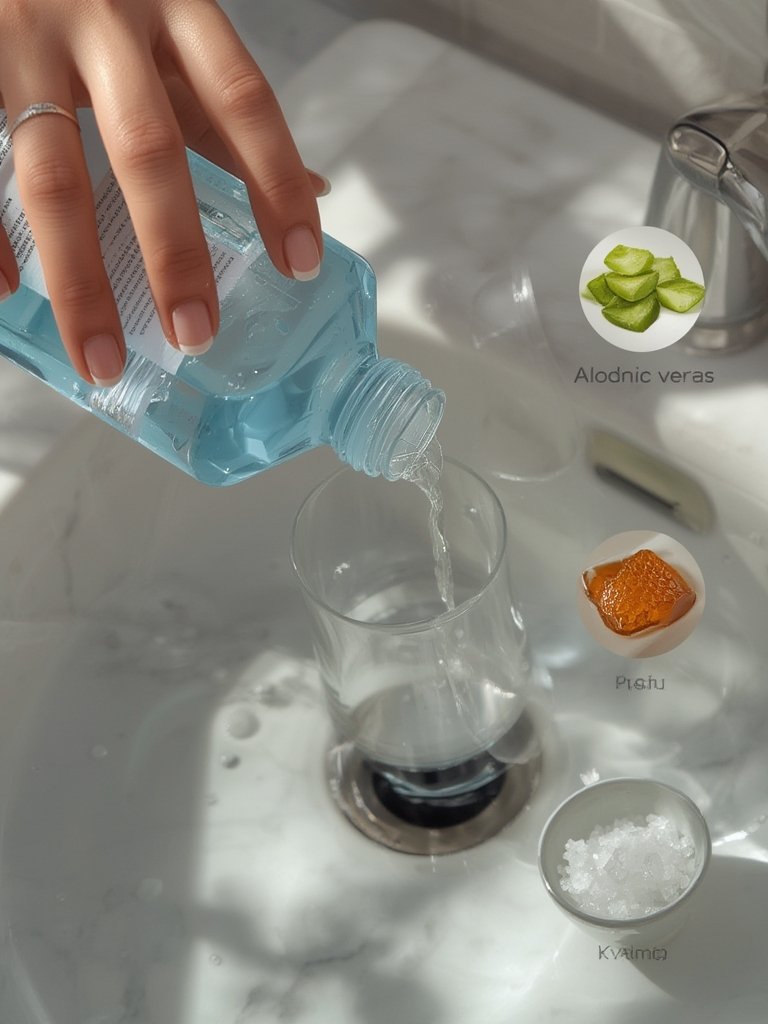
- Choose a proven formula: Look for key actives such as cetylpyridinium chloride (CPC), xylitol, Brazilian green propolis, zinc, or aloe vera. If you have known allergies, check for botanicals or flavorings that could cause a reaction.
- Read the product label for directions: Most alcohol free mouthwashes recommend swishing 10–20 mL (about 2–4 teaspoons) for 30 seconds to 1 minute. Do not dilute unless instructed.
- Swish gently: Unlike alcohol rinses, you should feel little or no burning. If you notice irritation or new symptoms, stop use and consult your dentist.
- Don’t rinse with water immediately: This gives the active ingredients time to work on your teeth and gums.
- Repeat as directed: Twice daily after brushing is typical, but follow your dentist’s advice for your specific gum health needs.
You can also support your results by brushing with a gum-friendly electric toothbrush, such as the Philips Sonicare ProtectiveClean 4100, which is designed to reduce pressure and maximize gum comfort.
Advanced analysis: evidence, pitfalls, and what’s missing
Fully understanding alcohol free rinse benefits and the science behind mouthwash for sensitive gums means diving into clinical data—and calling out what’s still uncertain for consumers.
Clinical Evidence: Efficacy and Microbiome
- A study found that alcohol free mouthwash reduced plaque more effectively than an alcohol-based formula (mean plaque index 2.18 vs 2.46, p < 0.05). [source]
- In a phase II trial (n=25), an alcohol free mouthwash containing 5% Brazilian green propolis significantly controlled both plaque and gingivitis for users with baseline PI ≥1.5 and GI ≥1.0. [source]
- Microbiome-focused trials found little difference in bacterial communities between ethanol-free and ethanol-containing rinses, with a slightly lower abundance of Fusobacteria and Actinobacteria for alcohol free formulas—suggesting microbiome stability. [source]
- Ongoing research is evaluating CPC+Zn alcohol free mouthwash for additional plaque reduction. [source]
Pitfalls and Limitations
| Aspect | Alcohol Free Mouthwash | Alcohol-Based Mouthwash |
|---|---|---|
| Plaque & Gingivitis Efficacy | Equivalent or better; needs larger ADA-level trials | Traditional, but may irritate sensitive gums |
| Burning & Dryness | Significantly lower risk | Common issue in sensitive users |
| Microbiome Impact | Stable; less disruption reported | Slightly more impact on oral bacteria types |
| Systematic User Complaints | No documented negative effects found in studies | More likely (burning, dry mouth, taste) |
| Guideline Endorsement | No specific ADA or dental society endorsement | Longstanding oral rinse standard |
Ingredient-by-Ingredient: What the Evidence Shows
- Cetylpyridinium chloride (CPC): Shown to reduce plaque and gingivitis; ongoing studies compare efficacy with flossing and alcohol-based rinses. [source]
- Xylitol: Xylitol is recognized for cavity prevention, but there’s no conclusive comparative data versus alcohol-based parents for gum health.
- Brazilian green propolis: Strong phase II trial data backs its benefit for plaque and gingivitis reduction.
- Aloe vera & Essential oils: Used for soothing effect, but direct outcome comparisons versus alcohol-based formulas are missing.
- Zinc: Often added for breath benefits; large-scale efficacy data still pending.
What’s Missing: Critical Gaps
- Lack of ADA-compliant, double-blind trials confirming best-in-class alcohol free rinse benefits for severe periodontitis.
- No systematically collected long-term tolerability or negative user feedback data on alcohol free options.
- Ingredient-by-ingredient comparisons, especially for xylitol and aloe vera, are not well examined in existing research.
Real-World Experience & Practical Concerns
Despite the promise, no clinical studies or public product review analyses reported systematic user complaints related to stinging, taste, or perceived lack of efficacy with alcohol free mouthwash products—even for those with sensitive gums (source). If you want real-life user reviews and deeper analyses, consumer perceptions remain a big opportunity for future research and buying guides.
Safety, Allergy & Long-Term Effects
Research so far reports no adverse long-term side effects, ingredient controversies, or increased allergy risks with gentle mouthwash for gums. However, flavorings and botanical extracts may still trigger reactions in sensitive individuals—so always check labels, especially if you have oral allergies.

Conclusion: best practices and actionable next steps
The evidence points to alcohol free mouthwash as a promising, gentle option—especially if you have sensitive gums or routinely experience burning with alcohol-based formulas. One study directly comparing both found alcohol free mouthwash reduced plaque more effectively (mean PI 2.18 vs 2.46, p < 0.05). Still, large-scale ADA-level trials and honest long-term user feedback remain essential before making broad claims.
If you are considering a switch, start by reading labels for effective ingredients (like CPC or Brazilian propolis), and trial an alcohol free rinse for 2–4 weeks. Pair this with a soft-bristle or power toothbrush for best gum health—and connect with your dentist if you have ongoing concerns about inflammation or periodontitis.
Looking for more real-world reviews of related oral hygiene products? Check out:
- Listerine Pocketmist Cool Mint Breath Spray I Portable Sugar-Free Oral Care Mist
- Listerine Original Antiseptic Mouthwash
- Medline Sparkle Alcohol Mouthwash
- Colgate Peroxyl Antiseptic Mouthwash with Hydrogen Peroxide
Ready to try alcohol free mouthwash? Review your product’s label—then report your findings to your dentist and let your experience help inform the next generation of practical advice.
Frequently Asked Questions
Is alcohol free mouthwash as effective as alcohol-based mouthwash for gum health?
Studies suggest some alcohol free rinses are equally effective (or better for plaque control), but more large-scale double-blind trials are needed. Look for formulas with CPC, xylitol, or propolis for best results. [source]
Is alcohol free mouthwash safe for daily use by people with sensitive gums?
Currently, research reports no long-term side effects or increased allergen risk for alcohol free mouthwashes used by people with sensitive gums. Always check for flavoring or botanical ingredient allergies. [source]
Are there any negative user experiences or complaints reported for alcohol free mouthwash?
No systematic complaints (such as burning or unpleasant taste) were reported in research on alcohol free mouthwashes, even for users with gum sensitivity. However, individual sensitivities are always possible. [source]
Can children or people with dry mouth use alcohol free mouthwash?
Alcohol free mouthwash is generally considered safer for children (under supervision) and for those with dry mouth, as it avoids the drying and irritation of alcohol. Always consult your dentist before introducing a new oral care product to your routine.
How do I compare prices and value between alcohol free and traditional mouthwashes?
No verified data on cost per ounce or price-to-performance ratios was found in clinical research. For best value, compare prices by ounce on retailer sites and look for products with key evidence-backed ingredients.